Kyle Wiens, CEO of iFixit, has been fighting for the Right to Repair since he started the company in his college dorm in 2002. He joined Spectruss founder Sam Silvey on the Spectruss Speakeasy to explain where that fight stands. The conversation runs from a rebuilt produce warehouse in Chattanooga to AI bots straining a site built to give repair knowledge away. If you own anything with a screen, a battery, or a motor, it affects you.
Why did iFixit choose Chattanooga?
Kyle says the decision came in two steps. iFixit was setting up a distribution center, so it needed a location that could get packages to New York and Miami quickly. Then the team asked where in that region they wanted to live. Kyle is big into mountain biking, and he wanted a place where the company could leave its corner of town better than it found it.
They landed in Onion Bottom, in a building that was a Dixie Savings produce hub in the 1950s and 60s. It was in rough shape. People were living in it, animals had moved in, and a thousand-foot-long wall was missing, removed to make room for a parking lot. iFixit rebuilt the wall, worked with the police to find new homes for the people there, and spent two years on construction. The building is about 50,000 square feet.
What does iFixit actually do?
Kyle calls iFixit the hub of the global repair movement. Teams there write repair manuals, and the site holds more than 117,000 of them. It runs like a wiki, so a community adds manuals too. Other teams warehouse and ship parts and tools, with more than a hundred thousand SKUs in all. When a new iPhone comes out, the team buys one, takes it apart, writes the manual, publishes it, and sells parts around it.
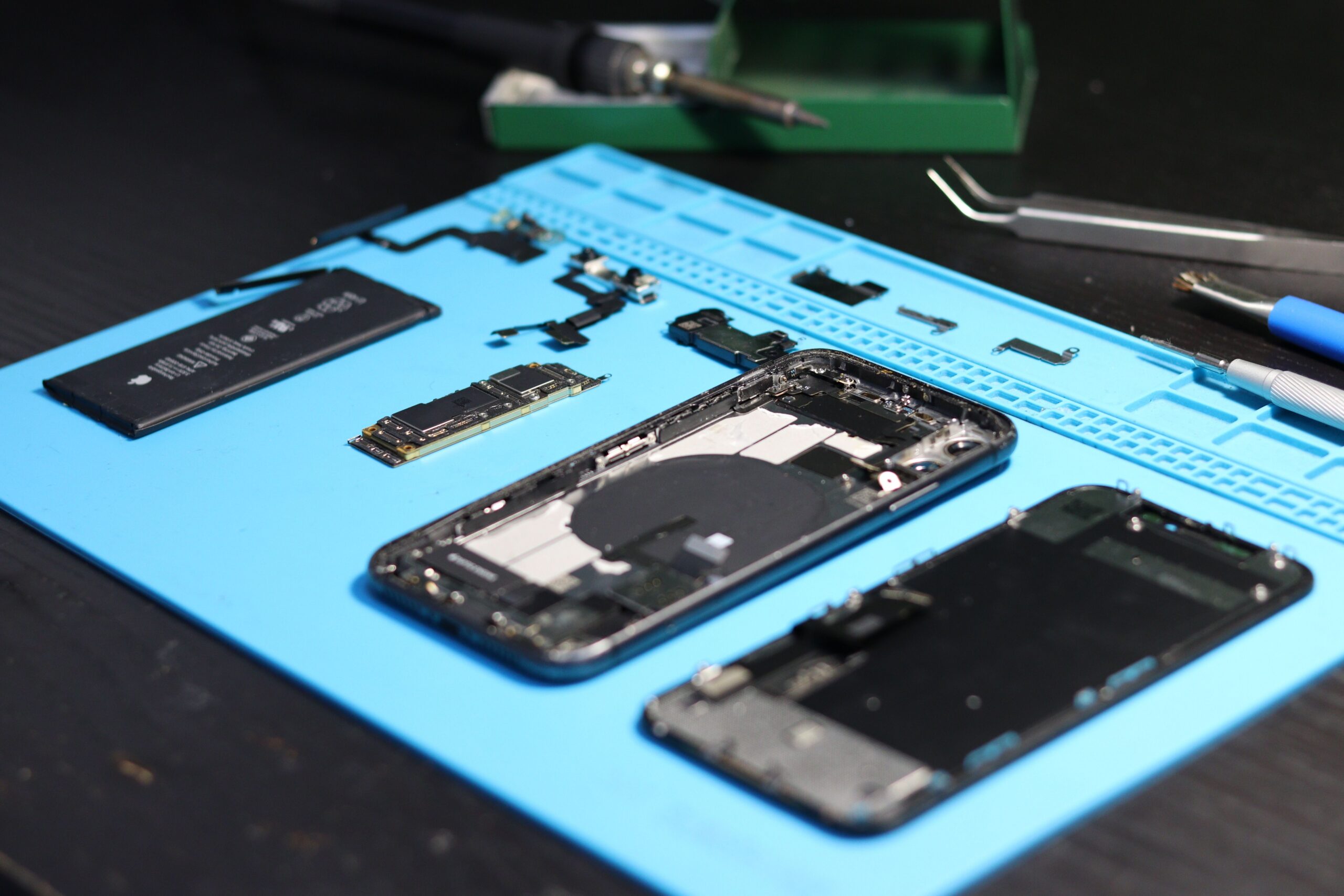
It started because Kyle could not find a repair manual for his Apple laptop. He fixed it anyway. Then he learned Apple was not making manuals available and was sending legal threats to anyone who had one. So he started writing manuals to replace the ones Apple had taken down.
Why did Kyle Wiens go to Congress?
Kyle first asked companies nicely. Apple had no interest. Friendly nudges turned into a fight. His conclusion was that hard-to-fix products are no accident. It is a systematic practice with a lot of legal backing, and changing it takes a concerted strategy.

He is open that regulation is not his natural position. He calls himself a pretty principled free-market person. But for a tractor, he says, there is no free market for repair manuals, because John Deere has a legally granted monopoly through its intellectual property. His starting point is simple: “I’ve got a thing, I bought it, I paid for it, I should be able to fix it.” Thirty years ago, he says, that was commonplace. It is not now.
The framework he helped build, called Right to Repair, says that if you sell a product, you make repair parts, tools, and the service manual available, and the manual is free. Kyle went to Congress to speak for it. He also says Colorado passed a law requiring John Deere to sell its repair software to farmers.
What is blocking repair today?
Kyle gave three examples. Apple switched from a Phillips screw to a proprietary five-pointed screw on the bottom of the iPhone, which he says locks you out. iFixit made a mold of it and sells its own screwdrivers. John Deere uses software locks, so fixing a tractor takes a laptop and software the company does not make available to farmers. And on a Hyundai, changing the rear parking brake takes a $2,000 adapter, $3,000 a year for software access, and a locksmith certification through AutoAuth, which requires a business license and a million-dollar insurance certificate. All of that to retract a brake caliper.
Kyle sees a window closing. We can still remember fixing things, and he worries that memory will fade. His question: “Can we change course before we forget that you could have ever fixed things?”
Why does Kyle Wiens rate AirPods a zero out of ten?
In the lightning round, Sam asked for a product Kyle refuses to buy because of how it is built. AirPods were his first answer. iFixit rates new products from one to ten on how easy they are to fix, and he says AirPods score a zero. There are three batteries, one in each earbud and one in the case, and he says they last two years on the outside. They cannot be replaced, and he says they cannot go in the trash because a compacting truck can ignite a battery. He asked a room of about a hundred electronics recyclers who wanted AirPods in their facility. Not one raised a hand.

Apple’s newest AirPods are incrementally better, he says, and may be the first to earn a two out of ten.
How are AI bots affecting iFixit?
Kyle says most internet traffic is now bots crawling, and most of iFixit’s bandwidth and server cost goes to serving bots, not people. About 30 percent of its traffic comes from Singapore, which he attributes to data centers. At one point, an Anthropic server sent iFixit over a million hits in 24 hours. Because iFixit is a wiki with revision history, bots look at every previous version of a page, and those pages are not optimized for that load. The result has been a fair amount of downtime.
His plan is to ask more visitors to create an account so iFixit can meter use, say a hundred manuals a day instead of a hundred thousand, and to push bots toward an API with keys, as Wikipedia has done. He says he is working on it and expects to roll it out this year. The principle is clear: “I want it to be free for humans, and I’d like to charge robots.”
Why does a repair CEO care about bikes and city design?
Kyle’s other thread is Chattanooga itself. He talks about White Oak Bike Co-op, which collects bikes, repairs them with volunteers, and gives them to kids and to people who need a way to get to work. He describes a woman whose new job at Applebee’s ended at 1 a.m., after CARTA buses stopped at midnight. He and a group of locals built bikechat.com, a map of friendly bike routes, and painted street stencils so riders can follow a loop from Coolidge Park to the zoo without the app.
He also thinks the city missed a chance on the Market Street repaving. A road like that gets repaved about every 20 years, he says, and designing it well costs no more than designing it badly.
Listen to the full conversation on the Spectruss Speakeasy
FAQ
Who is Kyle Wiens?
Kyle Wiens is the CEO of iFixit, the company he started in 2002 in his college dorm. iFixit publishes repair manuals and sells parts and tools. The team is about 150 people worldwide, with 30 to 35 in Chattanooga.
What is the Right to Repair?
Kyle describes it as a framework: if you sell a product, you make repair parts, tools, and a free service manual available.
Where can I find Kyle Wiens and iFixit?
Visit iFixit.com or the iFixit app. Kyle is on X at @kwiens and Instagram at @kylewiens.